Holaztec specializes in the design and implementation of client-specific electrical backup systems and Energy Storage Systems (ESS). We seamlessly integrate these solutions into existing residential and commercial electrical networks. While the function of a DC Automatic Transfer Switch (ATS) is conceptually similar to an AC ATS, they are utilized at distinct points within the solar power infrastructure.
What Does an DC-ATS Do?
The DC-ATS performs two essential, non-negotiable functions:
- Automatic Switchover: It swiftly switches solar panels between two solar MPPT inputs
- Rapid Shutdown Isolation: Voltage Isolation from the panels down stream in case of emergency scenarios
The Rapid Shutdown feature provides complete disconnection of solar power outputs from all cables and downstream devices when a voltage shutdown is required. This is a critical safety measure for emergency scenarios—such as firefighting—where solar panels continue to generate hazardous voltage even if the main grid is deactivated
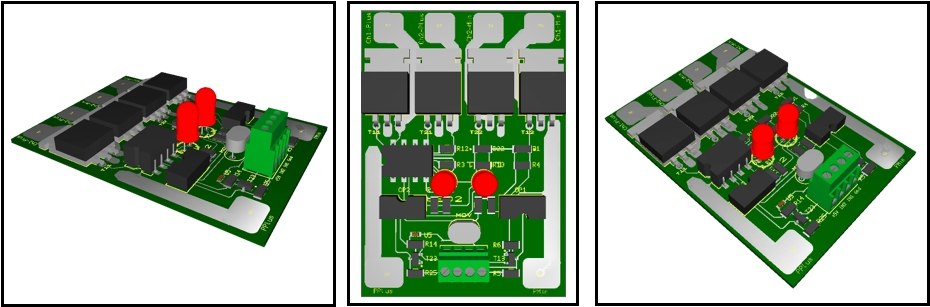
The engineering team at Holaztec is currently developing a compact DC-ATS architecture. By prioritizing spatial efficiency without compromising thermal performance, we are redefining the footprint of power management. Below and image of the electronic heart of the DC-ATS we make.
The Role of a DC-ATS in Energy Storage Systsems (ESS)
Overview of ESS Types
Energy Storage Systems (ESS) generally fall into two categories: Off-Grid and Bidirectional (Hybrid). While Bidirectional systems combine On-Grid and Off-Grid capabilities, both types leverage solar energy. Traditionally, Off-Grid systems focus on charging battery storage to power local loads, whereas On-Grid systems are designed for Net Metering—feeding excess energy back to the utility grid.
Market Trends and Challenges
In residential and small office settings, many clients have already invested in an existing On-Grid solar system. When looking to add storage, they often prefer adding an Off-Grid ESS due to lower costs and the wider variety of competing products available compared to more expensive bidirectional alternatives.
Furthermore, in regions where Net Metering policies are being phased out or are no longer promoted, bidirectional systems are limited to profiting only from daily price fluctuations (energy arbitrage).
The Solution: The DC-ATS
For clients with an existing On-Grid installation, the ideal scenario is to maximize efficiency by connecting solar panels to an Off-Grid ESS to charge batteries and power the home/office, while retaining the ability to export surplus energy to the grid.
Achieving this requires a DC-ATS. This unit serves as a dynamic switching bridge that connects the solar PV strings to either the On-Grid inverter or the Off-Grid ESS.
Key Functions of the DC-ATS:
- Rapid shutdown: In case of calamities everything downstream of the solar panels is without power
- Dynamic Switching: It automatically re-routes DC power between the On-Grid and Off-Grid systems without requiring manual intervention from the client.
- Optimized Energy Use: It prioritises battery charging and local consumption while ensuring that any leftover energy can still be fed back into the grid via the On-Grid inverter.
- Cost Efficiency: It allows users to gain the functionality of a hybrid setup using more affordable, specialized components rather than replacing their entire infrastructure with an expensive bidirectional inverter.
- Bulky DC Switches: No more need for heavy duty arc resistant DC switches.
Addressing the need for a versatile and safe energy management solution, Holaztec engineers have developed a proprietary, compact ATS design. This unit acts as the intelligent central nervous system for hybrid-capable solar arrays.
Summary
A DC-ATS (Automatic Transfer Switch) enhances a solar power plant with the following functionalities:
- Increases protection rapid shutdown during calamities
- Intelligent switching between MPPT inverters
- Optimized energy harvesting
- More flexibility in product choice resulting in lower total system cost
- Elimination of bulky DC switches.